


Professor Róbert Szuchy Speaks at International Energy Law Conference in Katowice
International Academic Conference Energy Justice & Energy Transition University of Economics in Katowice European Federation of Energy Law Associations University of Pavia Abu Dhabi University
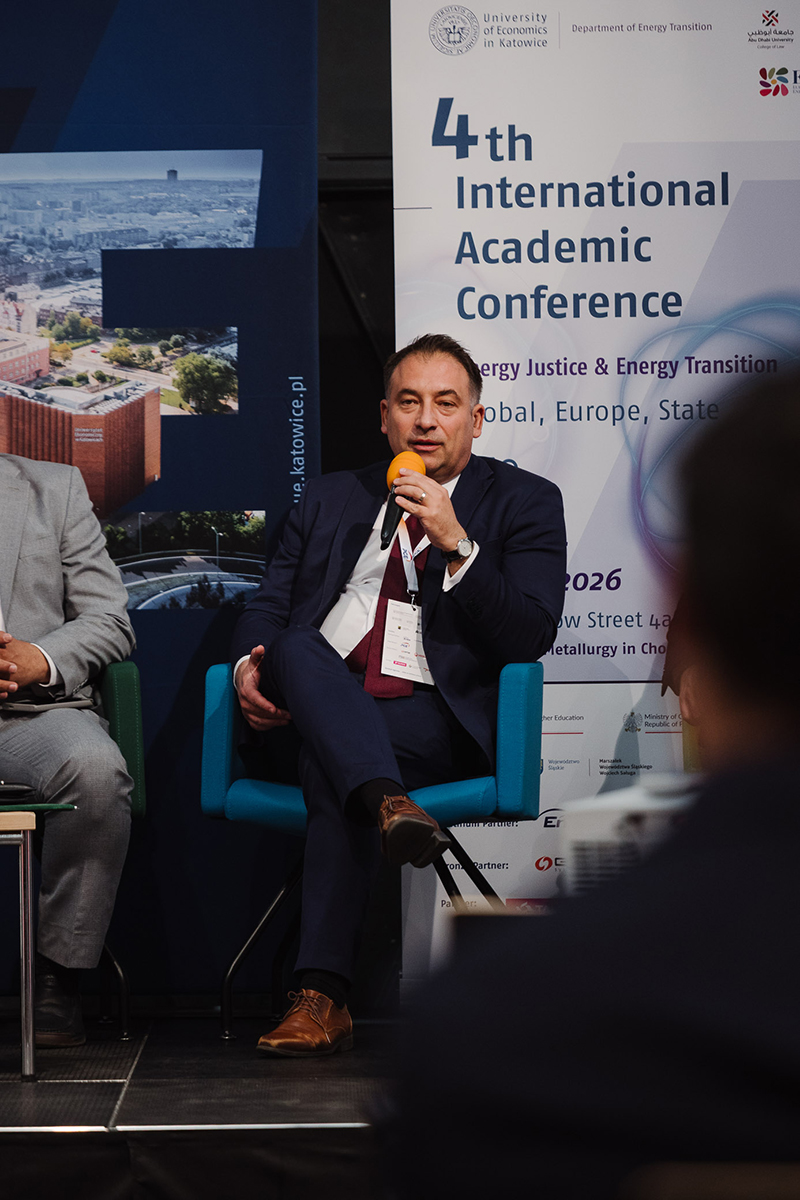
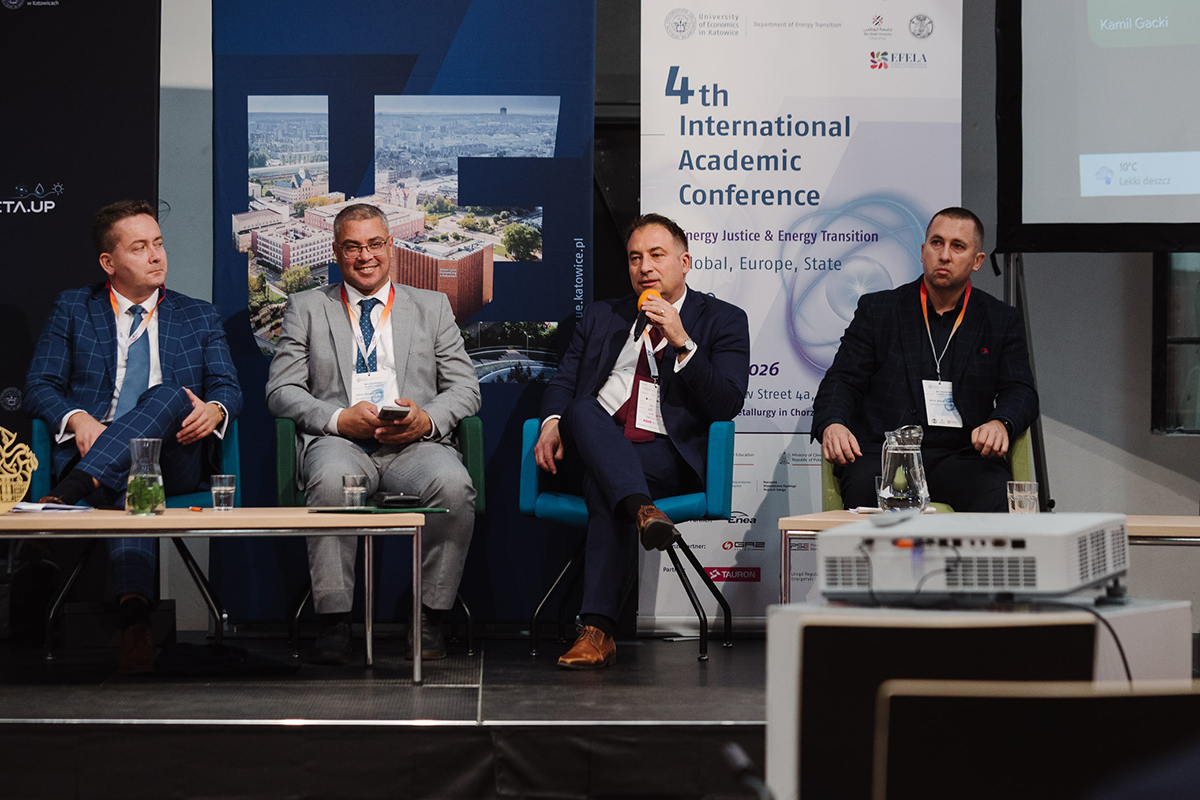
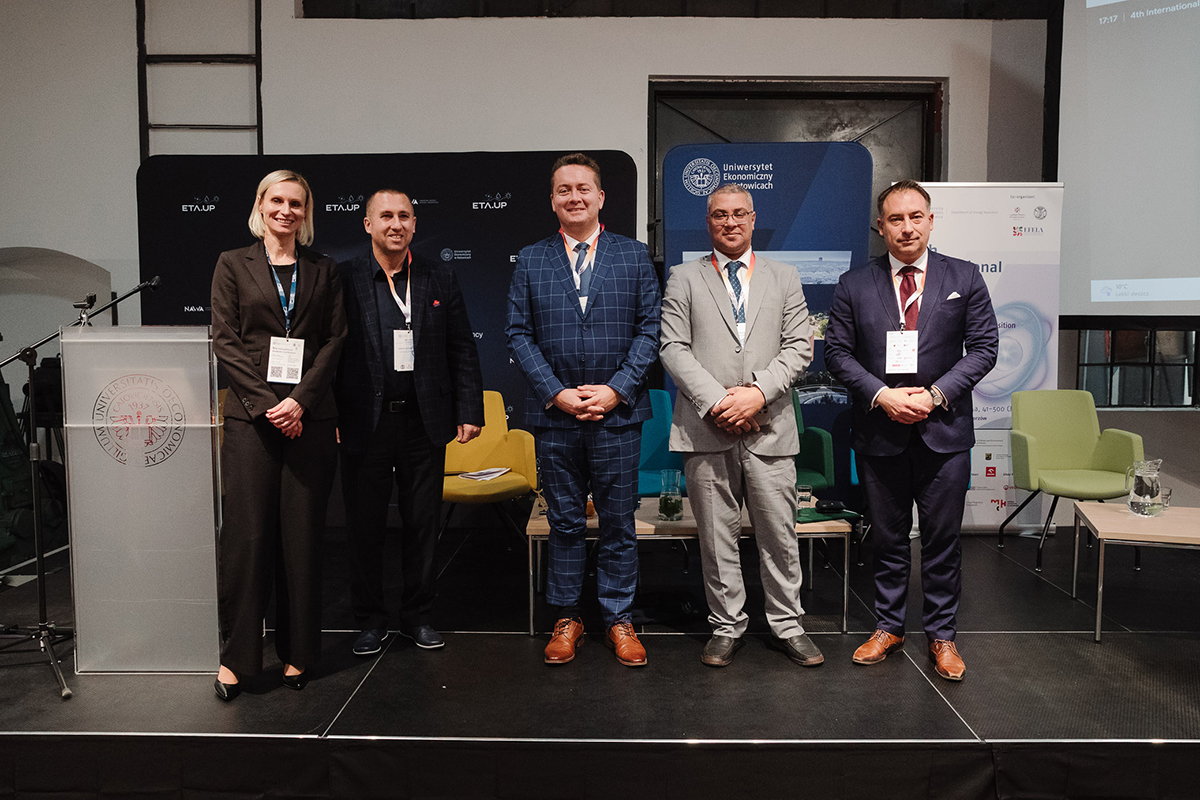
Prof. Dr. Róbert Szuchy, Vice-Rector for Education of Károli Gáspár University of the Reformed Church in Hungary and Full Professor at the Faculty of Law, delivered a paper on 22 October 2026 at the 4th International Academic Conference "Energy Justice & Energy Transition" in Chorzów, Poland. The conference was organised by the University of Economics in Katowice and co-organised by EFELA – European Federation of Energy Law Associations, the University of Pavia and Abu Dhabi University.
Held on 22–23 October 2026 at the Museum of Metallurgy in Chorzów, the conference has become one of Europe's leading academic forums on energy transition and energy justice. Now in its fourth edition, it brought together researchers, experts and representatives of the energy sector from around the world: alongside European scholars, this year's speakers came from Australia, Canada, Chile, Colombia, Brazil, the United Arab Emirates and the Philippines, among other countries. The plenary and parallel sessions addressed the global dimension of the energy transition, nuclear energy and long-term energy security, the digitalisation of the energy sector and the role of artificial intelligence, and the future of energy markets – with energy justice at the heart of every discussion.
Professor Szuchy presented his paper, "Who Pays for Artificial Intelligence? Hyperscale Data Centres, Energy Poverty and the Allocation of Grid Costs in EU Electricity Law", in the session on digitalisation and artificial intelligence in the energy sector. He argued that hyperscale AI data centres constitute a qualitatively new class of electricity consumer – very large, fast-ramping and geographically clustered. EU data centres already consumed 68 TWh of electricity in 2024, a figure expected to almost double by 2030. The central thesis of the paper is that, under the current regulatory framework, the cost of the network reinforcement these facilities require is recovered from all network users – including households – in proportion to consumption. The result is a regressive cross-subsidy that falls hardest on the roughly 41 million Europeans living in energy poverty. Comparing Ireland, the United Kingdom and Spain, Professor Szuchy showed that although none of these jurisdictions treats a hyperscale facility as just another industrial customer, none of them links the arrival of very large loads to the protection of energy-poor households. His conclusion was that the legal materials for a correction – cost-reflective network tariffs, conditionality in State aid law and the principle of proportionality – already exist in EU law; what is missing is the decision to use them.
Professor Szuchy also attended the conference as a representative of EFELA – European Federation of Energy Law Associations, one of the event's co-organisers. EFELA is Europe's leading network dedicated to energy law and energy policy research, bringing together national energy law associations, academics, legal practitioners, regulators and industry experts. His presence on behalf of EFELA strengthens the international visibility of energy law research at Károli Gáspár University and the University's integration into European academic networks.
The paper draws on two articles by Professor Szuchy currently under review with international journals, and is closely connected to the energy law research conducted at the Faculty of Law of Károli Gáspár University and to the Faculty's postgraduate programme in Energy and Natural Resources Law, of which Professor Szuchy is the programme director.
The University's presence was not limited to the main conference. On the preceding day, 21 October 2026, the organisers held an international conference for doctoral students, at which two of Professor Szuchy's PhD students, Adnan Ekin Günay and Kristóf Zsiga, took part and presented their research. The participation of these young researchers further strengthened Károli's international presence and illustrates how doctoral students of the University engage with European energy law forums as active members of the international academic community.
Further information on the conference is available on the organisers' website: www.ue.katowice.pl/4iac
Created: 2026. October 29.
Modified: 2026. October 29.