
"A university where traditions and innovations are intertwined.” This is how Professor Miklós Sárközy, Associate Professor of Ancient and Middle Eastern History at the Faculty of Humanities of the Károli Gáspár University of the Reformed Church in Hungary, specializing in Iranian Studies and the history of Central Asia described his recent experiences and impressions of the Tashkent State University of Oriental Studies, Uzbekistan. He experienced teaching in an environment where mobile devices are switched off during classes and where a university museum preserves institutional memory—both reflecting a strong sense of discipline and respect for tradition. At the same time, an immense sense of community and a well-organised, continuously developing academic structure characterise the university. Experiencing Navruz and the warm welcome made his stay even more memorable, and he recommends such academic exchanges to anyone wishing to broaden their knowledge and build international connections.
In which country and at which institution did you work or conduct research, how long did you stay there, and what was your specific area of focus?
I participated in the Erasmus Mobility project, and it was a great honour for me to travel to Uzbekistan, which is in Central Asia, in order to foster ties with higher education centres in Uzbekistan, where I taught for a week at the Tashkent State University of Oriental Studies, an institution I had gotten to know years before.
So that wasn't my first encounter with the Tashkent State University of Oriental Studies, but in the framework of Erasmus, it was a great honour to teach there and to promote Károli Gáspár University of the Reformed Church in Hungary in Uzbekistan.
I'm an orientalist focusing on the history, religious history, and historiography of Iran and Central Asia, and I decided to have four lectures, which eventually became five lectures based on the wishes of our friends in Uzbekistan.
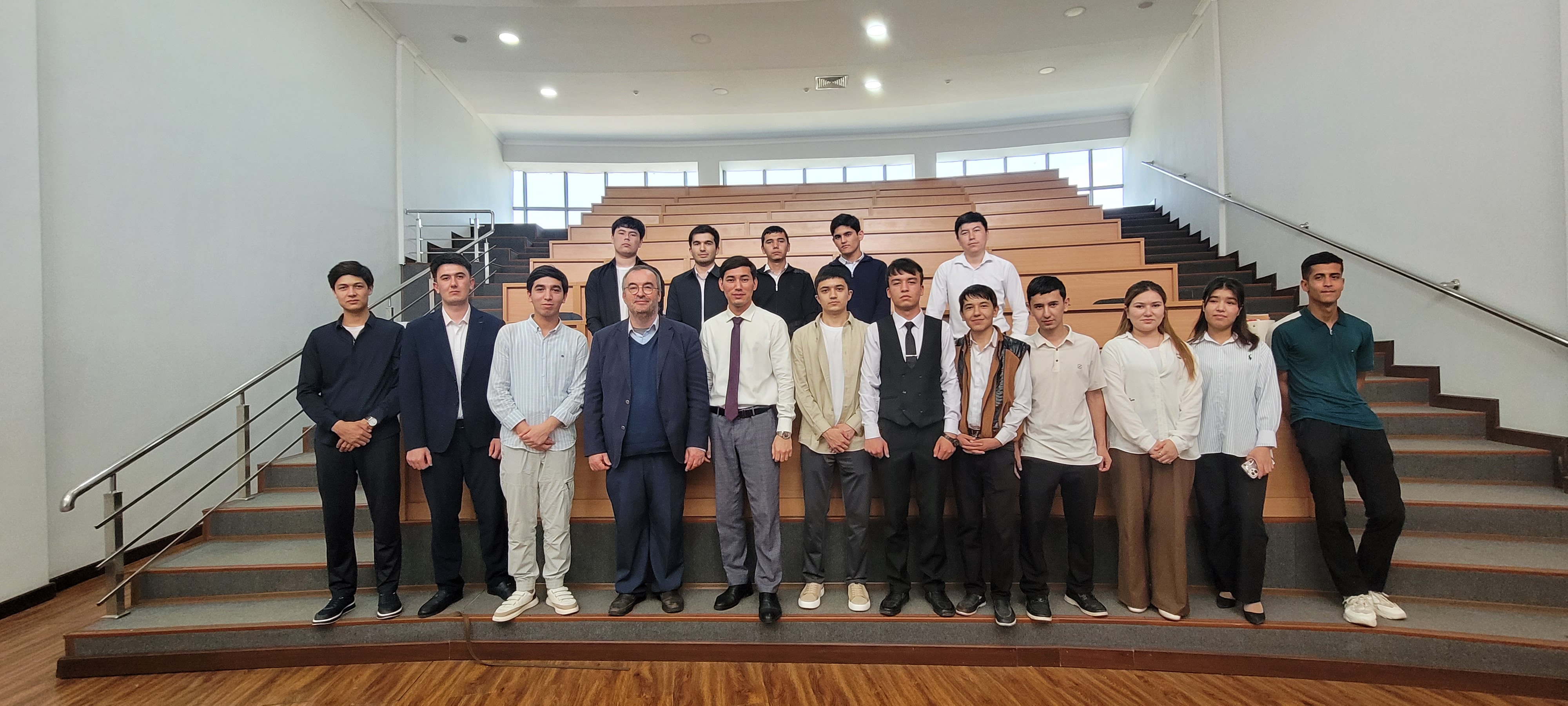
I lectured about my research, my books, and the core areas of my research, which are Shiite studies, medieval Central Asian history, and Persian historiography of Central Asia. These were the topics which I presented during my five lectures, both in English and in Farsi languages.
What were the most significant differences between the education system there and the one we have here in Hungary?
Well, I think their education system shows many commonalities with ours, as both were significantly influenced by the Soviet educational system before 1991.
So there are similarities, however during the past 35 years, they also have managed to modernize, upgrade, and update their educational system. They have BA and MA-level studies, and they have PhD programs as well.
I think the main difference is that they have just started building their European connections, and the focus of their departments is on teaching languages. So they teach less theory, I guess, and more linguistics, more practical usage of languages.
The Tashkent State University of Oriental Studies is a very well-developed university, and in this framework, they are inspired to build further ties with our university.
You should know that I just started working with them two to three years ago when I was invited as a guest lecturer. So I have spent two semesters as an online guest lecturer.
I had my own very positive experience with them where I taught Persian literary history and Iranian history to the students. I got to know many of their professors and the teaching staff, and they are very kind and actually very professional in their organizational skills.
Was there any method or approach that you found particularly inspiring or worth adopting here as well?
Well, they are well organized and their classes are well disciplined. To be honest, I would love to welcome such a more disciplined approach in class, that students, for example—maybe you find me a bit conservative—but students need to turn off their mobiles before the class in Uzbekistan, at least at this university. So students need to follow something like class etiquette. Of course, it's pretty difficult to check everybody, but the idea of putting aside mobile devices during classes can help students to be more focused. This is my impression.
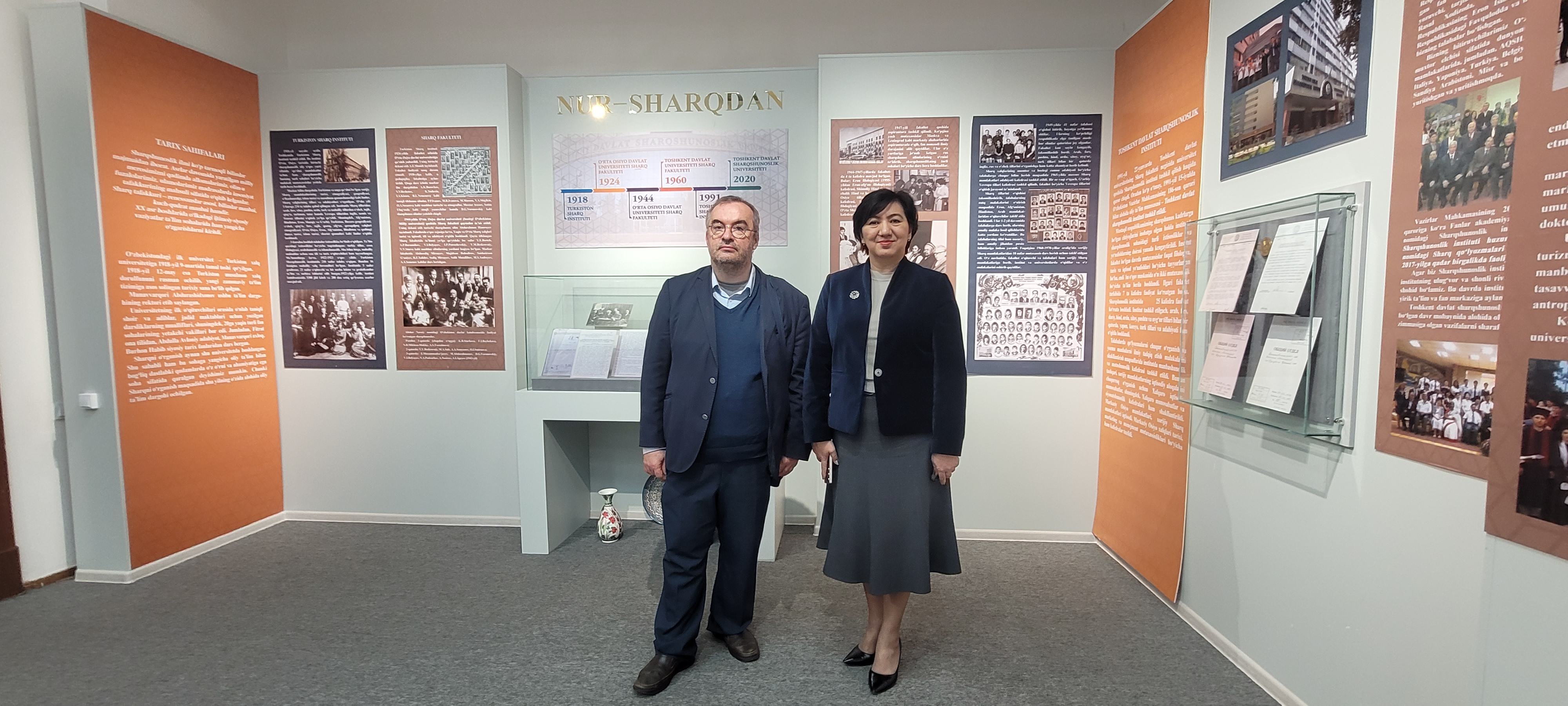
And otherwise, they are actually well-read, and they have a very good library. And the thing which I found very interesting is that they have a university museum in order to preserve the memories of past generations of professors and events, because this is the oldest university of Oriental Studies in Uzbekistan, perhaps in Central Asia, founded in 1918, right after the collapse of the Tsarist Empire.
They established the museum, where the rector of the university, Professor Gulchekhra Rikhsieva, kindly invited me to see it and to discuss the history of this university. This is a wonderful and very innovative way of thinking, to preserve the memories of past professors, and they even have a coat of arms, which is wonderful as well, showing the rising sun as a symbol of Oriental Studies.
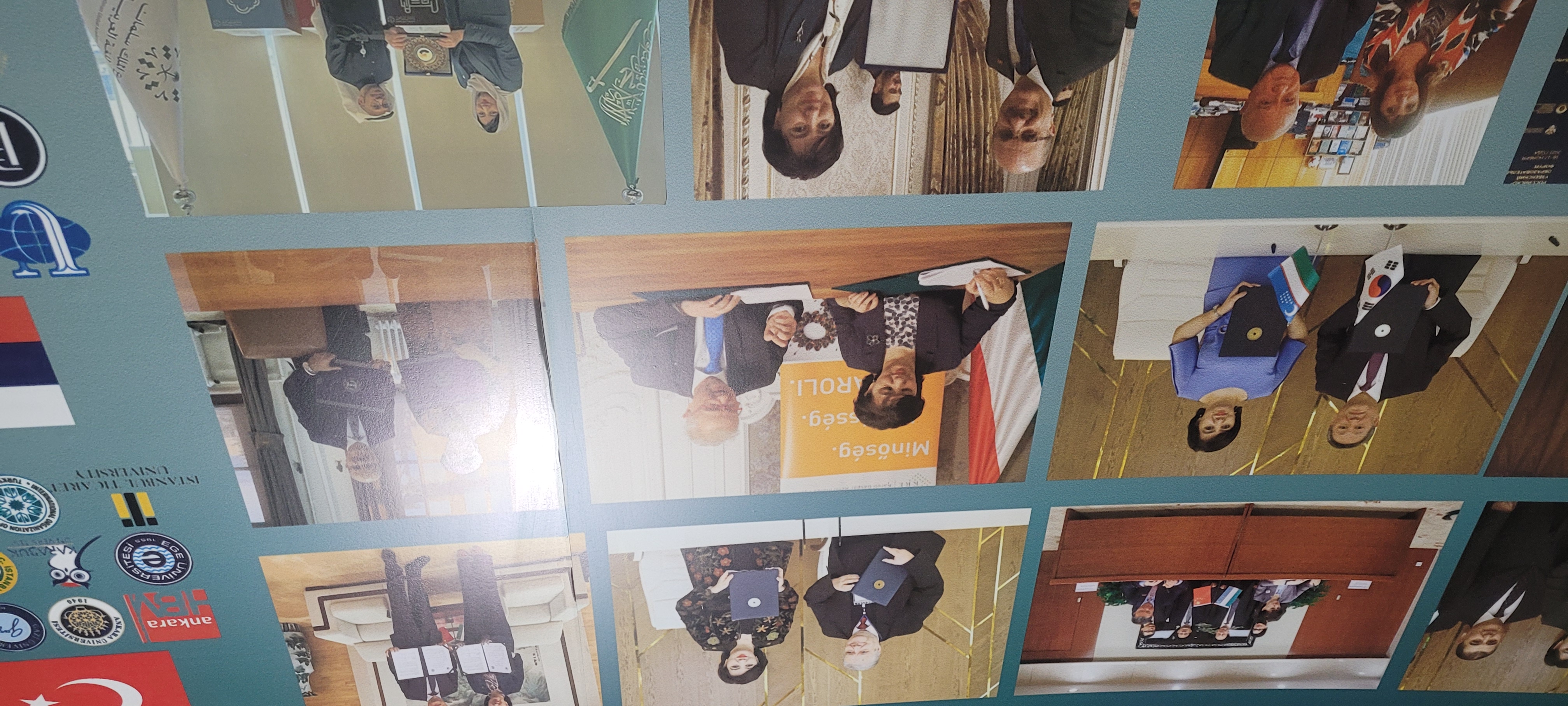
Also, they place a strong emphasis on diplomatic ties, so the image of Rector Trócsányi was also on the wall of this museum.
This is a university where traditions and innovations are intertwined.
Do you plan to continue or expand your collaboration with international partners or this particular university in the future?:
Absolutely. Actually, I do have a student at this university who is now my MA student—she used to be my BA student. I was her thesis supervisor, and now I had the chance to meet her personally, because so far we had only had online discussions. Now we met, and she’s a brilliant student.
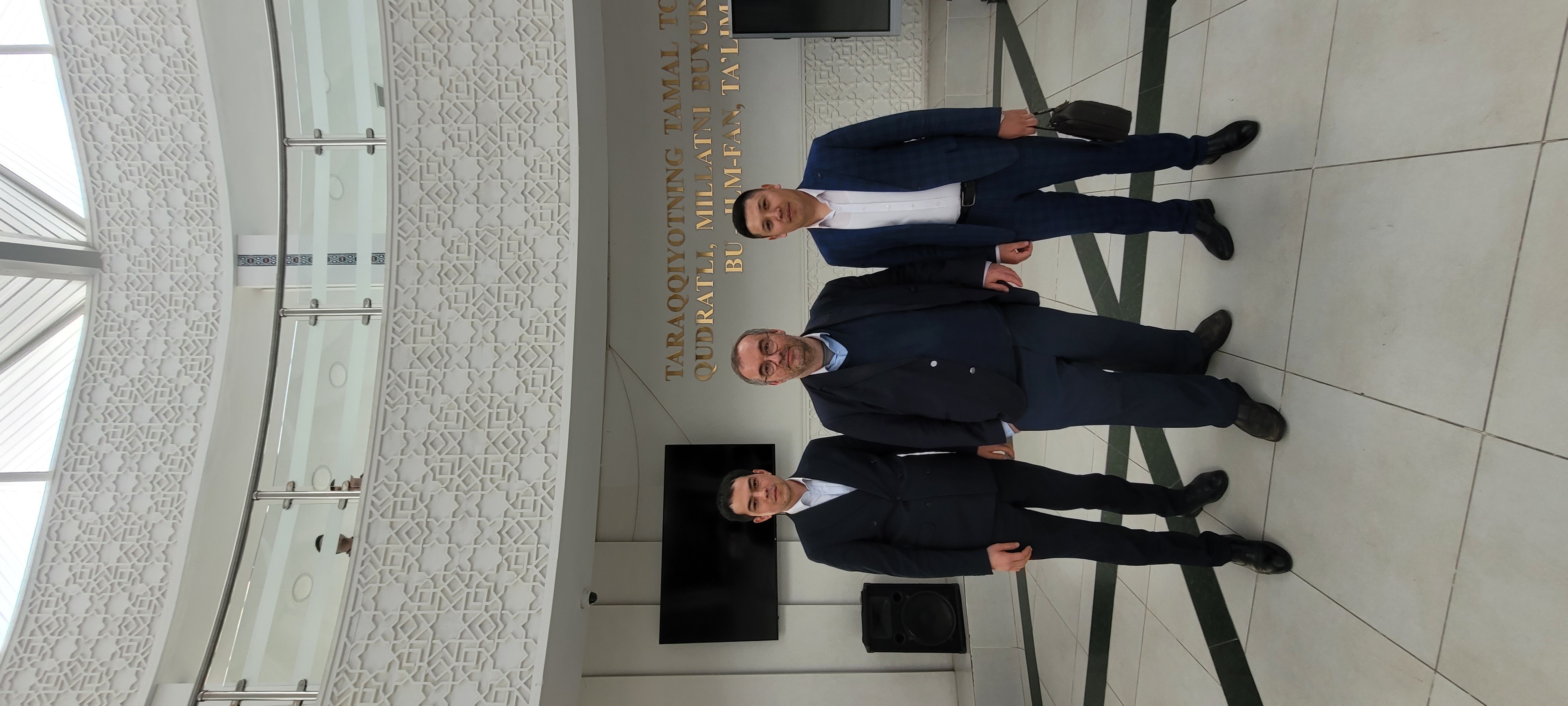
I managed to meet the rector of the university twice, the vice-rector, the dean of the faculty, and also many leading professors, scholars, and colleagues. As I told you, they have already gotten to know me. I hope that in the near future we can welcome these professors to Hungary. I would welcome mutual cooperation in the sense that not only we visit them, but they should also visit us, because then we can benefit from their vast knowledge. This is actually the most important centre for Oriental Studies. Besides Oriental languages such as Korean, Japanese, Chinese, Persian, Turkic languages, and Hindi, they also offer classes for students interested in English, German, and French. I very much hope that in the near future we can see the arrival of professors and students from this university.
A neighbouring university, Pázmány Catholic University, had already hosted students from this university, and I met them—some of them recognised me and greeted me in Hungarian: “Jó napot kívánok!” So somebody greeted me quite suddenly and unexpectedly in Hungarian in the aula, the central meeting hall: “Jó napot kívánok! Good morning, Professor.” They recognised me because they had met me last year.
So Uzbekistan is a very important partner for us. It is a very young and growing society with much potential, and we can benefit from this cooperation in many fields. The faculties of Humanities, Law, Social Sciences, and even Health Sciences can benefit. Uzbekistan has a wide variety of universities. Besides the university, we also enjoyed the warm hospitality—this Central Asian, immense hospitality. We had the chance, because of the period we selected for this visit—my two colleagues, Miklós Péti and Ágnes Kiricsi from the Department of English Studies at Károli Gáspár University of the Reformed Church in Hungary, and I—to experience the period of Navruz, which is the vernal equinox festival on the 21st of March. Traditionally, it is considered the beginning of the New Year in Central Asian and Iranian societies.
This was the Navruz period, and just as we have the so-called Training Week at Károli, they had the Navruz festival, which is a major event at the university. Imagine that many of the students and every department of the university were present. We were quite lucky because, due to bad weather, they rescheduled the festival. Originally, it was intended to take place on Saturday, but because of the bad weather forecast, they moved it to Thursday—the last day of our visit to the campus of the Tashkent State University of Oriental Studies.
This was quite a spectacular event: every department represented one province of Uzbekistan, and they prepared food, costumes, and dances. The rector visited each department one by one. There was much celebration—a good symbol of Uzbekistan, of Central Asia, a truly essential cultural event. It was quite similar to our Training Week, where this sense of community is emphasised: that we are not only a university where students study individually, but also a community. In this sense, the Tashkent State University of Oriental Studies is very similar to Károli, where community matters.
What advice would you give to young educators who are considering gaining experience abroad?
This is very important. The exchange of knowledge and the experience of teaching and learning abroad greatly enhance your chances for a better future. If you have the opportunity to hear different approaches from different academic centres, that definitely enriches your knowledge. Also, when you are abroad and spend a semester or two at a university anywhere, this helps you embrace new experiences—cultural experiences. You can build new friendships and even academic ties.
In Uzbekistan, I have been active for nearly 20 years. During this time, I have managed to build very deep contacts with different academic centres, which have greatly influenced my own research. These connections help me to conduct new research, and I very much hope that, based on my very positive experiences at the Tashkent State University of Oriental Studies, I can continue my research and foster further ties with the academic centres of Uzbekistan.
I very warmly recommend Uzbekistan for every scholar and student of Károli University.