
The Polish–Hungarian Energy Forum 2026 was held at HUNGEXPO Budapest on 6 October 2026. Its opening expert panel was moderated by Prof. Dr. Róbert Szuchy, Vice-Rector for Education of our University and Professor of Energy Law at the Faculty of Law.
The Polish–Hungarian Energy Forum 2026 was held at HUNGEXPO Budapest on 6 October 2026. Its opening expert panel was moderated by Prof. Dr. Róbert Szuchy, Vice-Rector for Education of our University and Professor of Energy Law at the Faculty of Law.
Organised by the Polish-Hungarian Chamber of Commerce together with the Polish Investment and Trade Agency (PAIH) and the Hungarian Electrotechnical Association (MEE), under the honorary patronage of the Embassy of the Republic of Poland in Budapest, the English-language Forum brought together government representatives, energy companies and professional organisations of the two countries. The event could hardly have been more timely: several decisive EU energy files – the implementation of the electricity market design reform, the Affordable Energy Action Plan, the 2040 climate target, the introduction of ETS2 and the Social Climate Fund – are taking shape right now, while Central European economies continue to carry a regional energy price premium. The Forum was opened by keynotes from Krisztina Tarjányi, Deputy State Secretary at the Hungarian Ministry of Economy and Energy, and Konrad Wojnarowski, Undersecretary of State at the Ministry of Energy of the Republic of Poland.
The first panel, led by Róbert Szuchy, addressed two questions: the scope for regional cooperation and joint advocacy within EU energy policy, and the impact of energy prices and market regulation on businesses and households. The panellists were Agnieszka Ozga, Director of the Energy Transformation Division at GAZ-SYSTEM S.A., Poland’s gas transmission system operator; László Fritsch, Deputy CEO of MVM ONEnergy Zrt.; and Zsolt Jamniczky, Deputy CEO of E.ON Hungária Zrt. and Member of the Board of Eurelectric.
One of the panel’s main conclusions was that Poland and Hungary are largely on the same side on most of today’s EU energy files, and that the channels for joint advocacy – the V4, the Three Seas Initiative, the regional work of ACER, ENTSO-E and ENTSOG – already exist; value is created where these formats carry concrete, pre-agreed positions into EU decision-making. Infrastructure alone is not enough: the Polish–Slovak and Slovak–Hungarian sections of the North–South Gas Corridor have been built, yet market flows do not follow the intended direction, so the task for the coming years is less about building than about operating – tariffs, capacity booking, the next round of projects of common interest (PCI), hydrogen and biomethane readiness. On the price side, the targeted protection of vulnerable consumers (ETS2, Social Climate Fund) has to be aligned with the long-term contractual tools industry needs (PPAs, CfDs), without letting network costs cancel out market signals.
Together with the participating companies, the Chamber is preparing a short summary of the Forum’s conclusions, with introductory remarks by the panel’s moderator; the document will serve as the starting point for further cooperation between the institutions and companies of the two countries – joint responses to EU consultations and project-level coordination on cross-border, hydrogen and biomethane projects.
The invitation is also a recognition of the University’s energy law community: the Faculty of Law runs the postgraduate LL.M. programme in Energy and Natural Resources Law, for which Róbert Szuchy is the programme director.
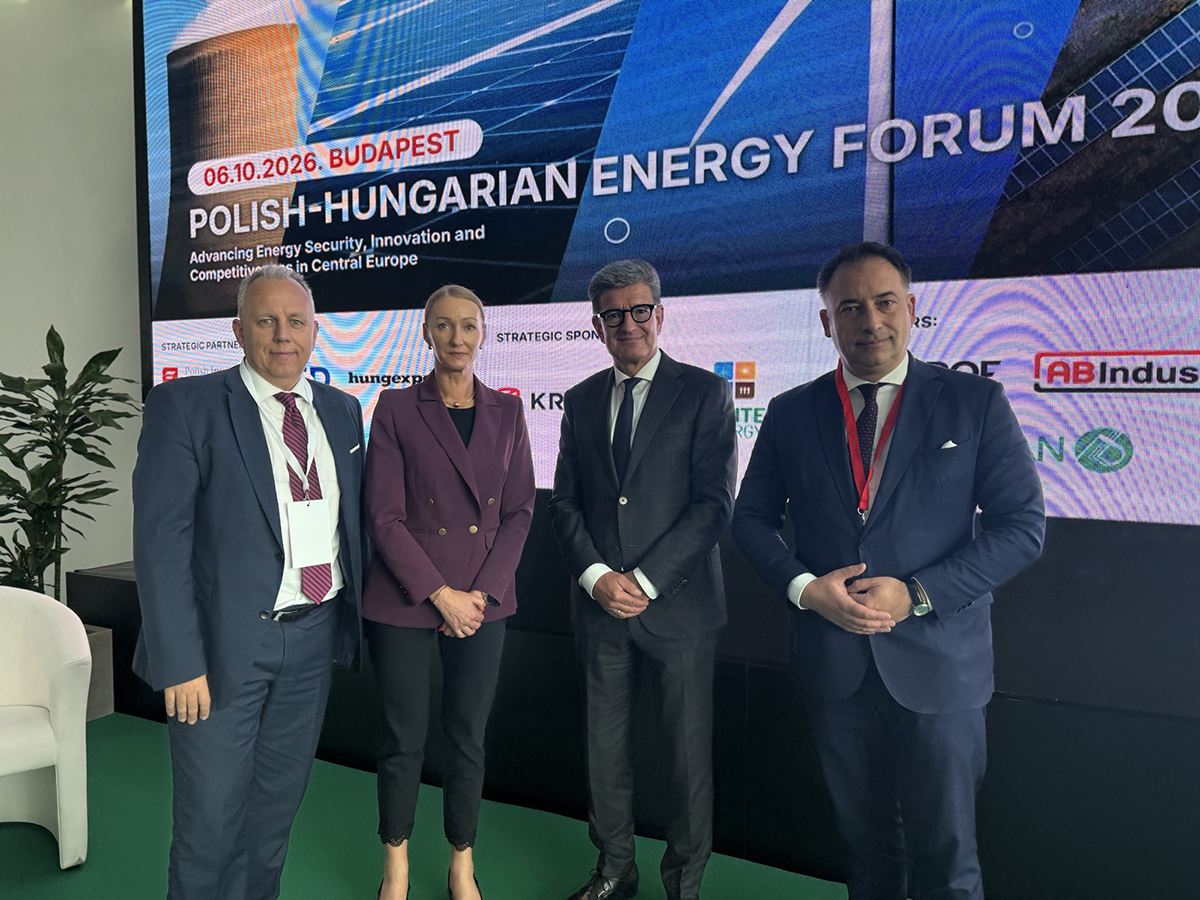
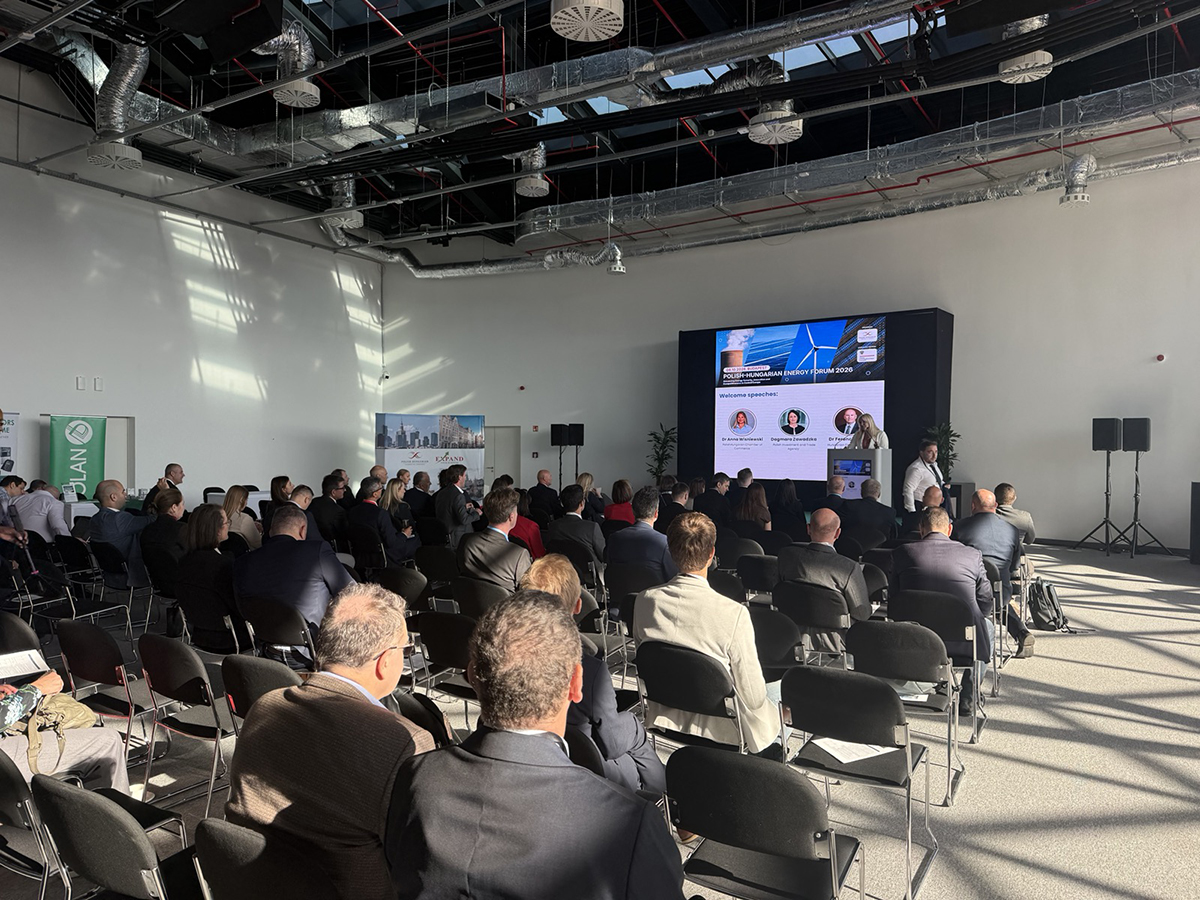
Participants of the opening panel of the Polish–Hungarian Energy Forum 2026 at HUNGEXPO Budapest (6 October 2026)